The Denim Tears Cotton Wreath hoodie sits in a strange space in fashion. It is, on the surface, a simple cotton sweatshirt. No exotic leather, no cutting-edge technical fabric, no precious metal hardware. Yet it routinely sells for two to four times its retail price, with some versions commanding over a thousand dollars on the resale market . Understanding why requires looking beyond the garment itself and into the story it carries.
The Meaning Behind the Wreath
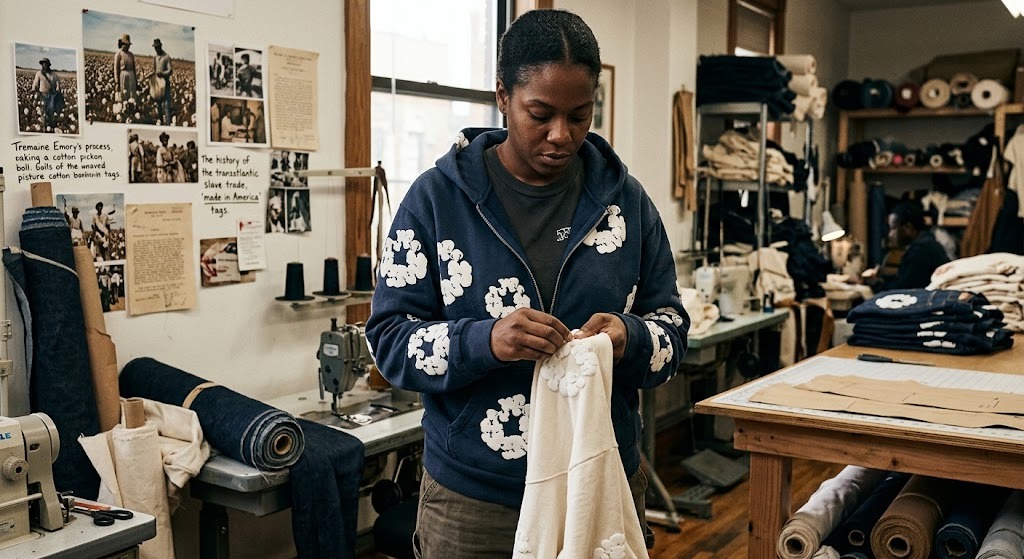
The cotton wreath is not a decorative floral pattern. It is a deliberate historical reference. The motif depicts cotton—the crop that built enormous wealth in America through the forced labor of enslaved Black people . Tremaine Emory, the founder of Denim Tears, has spoken openly about his family’s history as enslaved laborers and cotton pickers, and the cotton wreath serves as both a memorial and a form of reclamation .
When someone wears this hoodie, they are not simply wearing a logo. They are wearing a symbol that carries the weight of American history. Emory has described it as “a talisman for Black people,” and his stated goal is to spread that symbol as far as possible into popular culture so that it generates conversation . This cultural density is the foundation of the hoodie’s value. It transforms a basic garment into something closer to a wearable statement.
Scarcity and the Drop Model
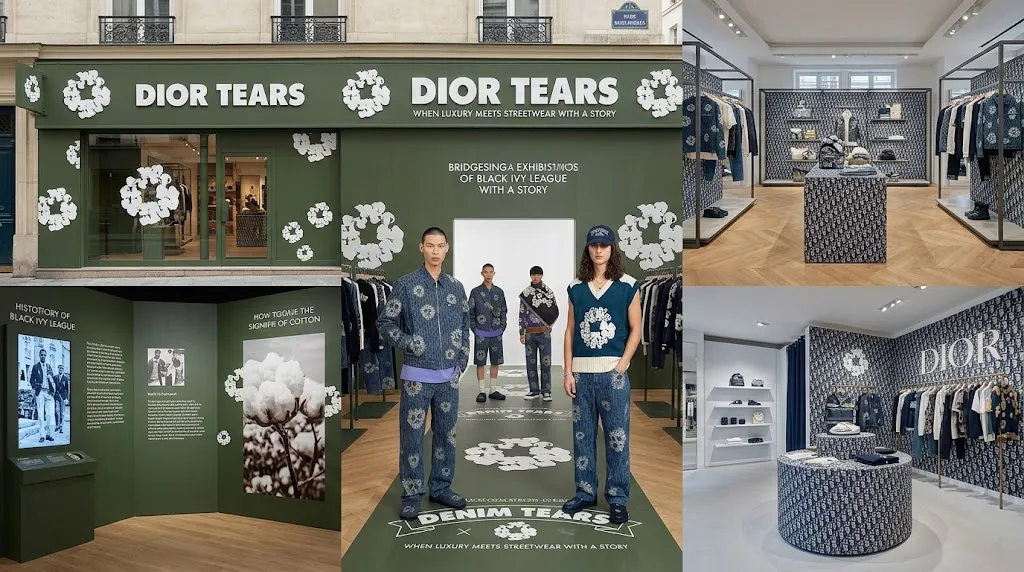
Denim Tear operates on a limited-release model that creates intense scarcity. The brand releases products in small batches, often through its own website or pop-up locations, and they sell out almost immediately. One of the most dramatic examples came when the brand released 30,000 cotton wreath sweatsuits and sold every single one in fifteen minutes .
This approach does two things. First, it ensures that demand consistently exceeds supply, which drives up resale prices. Second, it creates a sense of urgency and community among buyers. Those who secure a piece feel they have obtained something rare and culturally significant, not something that will be restocked indefinitely. The Cotton Wreath hoodie is not designed for mass production. It is designed for a moment, and that moment passes quickly.
Celebrity Co-sign and Cultural Validation
The hoodie’s visibility among influential figures has played a major role in its price trajectory. A$AP Rocky, Offset, Central Cee, and others have been photographed wearing Denim Tears cotton wreath pieces, exposing the brand to audiences far beyond the fashion niche . Cardi B and Bella Hadid have also worn the brand, broadening its appeal across different corners of pop culture .
This kind of organic co-sign matters because it signals cultural relevance. When artists and tastemakers who could wear anything choose to wear your hoodie, it tells consumers that the piece has value beyond its material construction. It becomes part of a visual language associated with a certain level of cultural awareness and style.
The Resale Market Amplifies Everything
The numbers tell a striking story. A cotton wreath zip hoodie with a retail price of around $210 can sell for $400 or more on the resale market . The most extreme example is the Swarovski crystal version, which retailed for $1,400 and has traded as high as $2,178 .
These resale prices are not arbitrary. They reflect a genuine imbalance between how many people want the hoodie and how many can actually get one at retail. The scarcity created by the drop model, combined with the cultural prestige attached to the cotton wreath symbol, makes the hoodie a desirable asset. Some buyers are collectors who want to own a piece of fashion history. Others are simply people who appreciate the design and are willing to pay a premium for something they missed at retail.denimtearsclothing.com
What You Are Actually Paying For
When you buy a Denim Tears Cotton Wreath hoodie, you are paying for several things at once. You are paying for a quality garment—the construction and materials are solid, though not exceptional. You are paying for the cultural narrative embedded in the design, which gives the piece meaning that a plain grey hoodie could never have. And you are paying for access to a community of people who understand and value that narrative.
Emory himself has said he wants people to wear his clothes, not just collect them . The hoodie’s value comes partly from its presence in daily life, from the conversations it starts when someone asks about the wreath. That intention—to make history visible in the mundane act of getting dressed—is what separates Denim Tears from brands that trade on aesthetics alone.
Conclusion
The Denim Tears Cotton Wreath hoodie is expensive because it is more than a hoodie. It is a limited-edition cultural object that happens to be wearable. Its price reflects the intersection of historical meaning, strategic scarcity, celebrity validation, and genuine demand. Whether that price feels justified depends on what you value in clothing. If you are looking for warmth and comfort, there are cheaper options. If you are looking for a garment that carries a story and signals participation in something larger than fashion, the cotton wreath hoodie makes a different kind of sense.