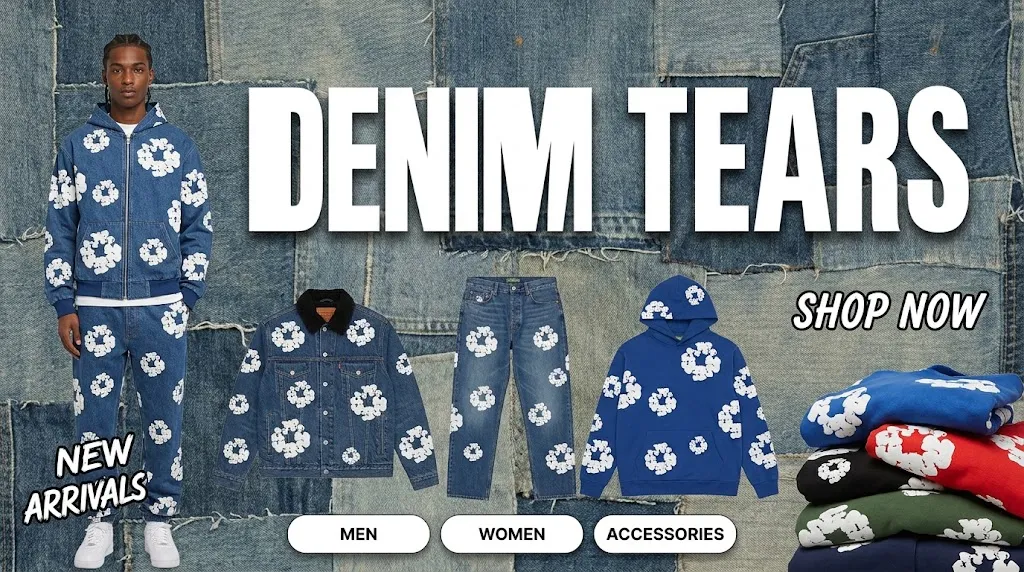
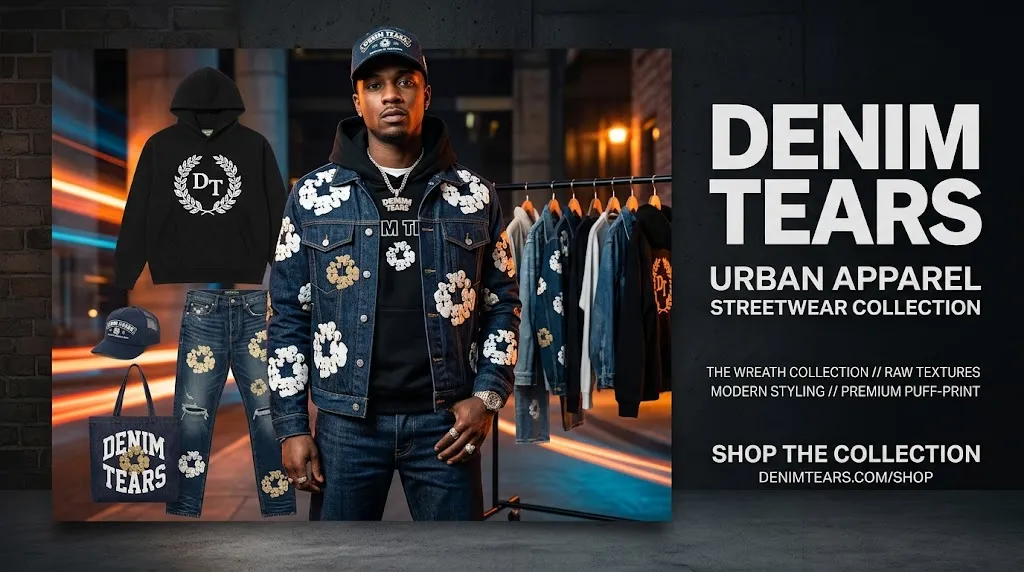
Denim Tears isn’t just another streetwear brand. Since 2019, Tremaine Emory has built something that sits at a strange intersection: part fashion label, part history lesson, part cultural provocation. And the prices reflect that ambition. A hoodie runs $210. A pair of jeans can hit $450. Some pieces stretch into the thousands.
So when you’re staring at a checkout page, the question becomes real: are you paying for quality, or for a story?
The honest answer is that it depends on what you’re buying. Denim Tears Clothing operates across a surprisingly wide range of product types and price points, and the value proposition shifts dramatically depending on which piece you’re looking at. Some items justify their price tag through genuinely impressive materials and construction. Others lean heavily on the cultural weight of that cotton wreath graphic to carry the value.
This breakdown will help you figure out where the money actually goes.
The Core of Denim Tears: More Than a Logo
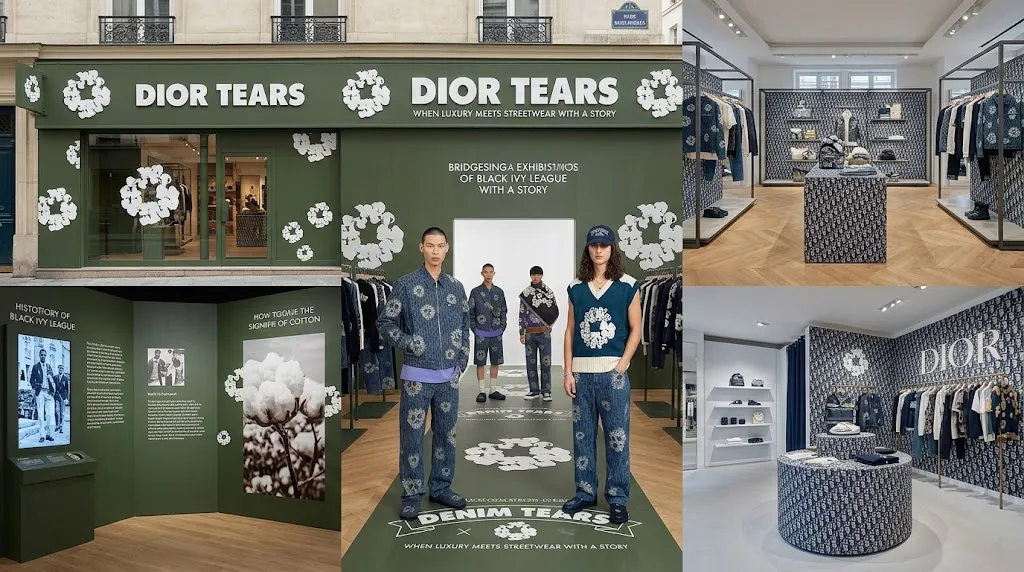
Before we talk fabric weight and stitching, it’s worth understanding what you’re actually buying when you purchase Denim Tears. The brand’s central motif — the cotton wreath — isn’t a random design choice. Cotton was the economic engine of American slavery, and the wreath format transforms that symbol of exploitation into something resembling honor and remembrance.
Tremaine Emory launched the brand in 2019, exactly 400 years after the first enslaved Africans arrived in America. Every collection is built around telling a facet of the African Diaspora’s story. The brand’s products have been featured in permanent collections at the Metropolitan Museum of Art’s Costume Institute and exhibited at the SCAD Museum of Art. This isn’t marketing fluff — it’s institutional recognition that positions Denim Tears closer to conceptual art than typical streetwear.
Does that context make a hoodie worth $210? Not automatically. But it does mean you’re participating in something with more intellectual substance than most brands offer. The question is whether the physical product lives up to that.
Denim: Where Denim Tears Actually Earns Its Name
If there’s one category where Denim Tears justifies its pricing most convincingly, it’s denim. This makes sense — the brand literally has “denim” in its name, and Emory has treated the fabric as central to the project from the beginning.
The In-House Denim Line
In late 2025, Denim Tears launched its first proprietary denim collection, moving beyond its earlier reliance on Levi’s collaborations. The results are genuinely impressive.
The core denim uses heavyweight 14 oz fabric, offered in two fits: Straight Leg and Baggy. For context, most mass-market jeans use 10-12 oz denim. Fourteen ounces gives the fabric substantial structure and durability — these are jeans that will hold their shape and take years to wear out. There’s also a 13 oz Japanese selvedge option in raw, unwashed form, woven on traditional shuttle looms.
The production standards are equally serious. Every piece is cut, sewn, and washed in the United States, handled by a manufacturer described as “the cleanest denim factory in the world” with sustainable practices that recycle 98% of water used in the wash process. This is the kind of manufacturing transparency you rarely see in streetwear.
Fit and Feel: What to Expect
Reviews of the in-house denim line describe a meaningful difference between the washes. The raw denim starts stiff with structure, breaking in over time. The light wash, by contrast, arrives “buttery soft” while retaining substantial weight. The baggy fit sits low on the hips with a relaxed drape that pools slightly at the foot — that deliberate “heel drag” look that denim enthusiasts chase.
There’s one crucial thing to know before ordering: the denim runs small and shrinks. One detailed review notes that high-weight denim with minimal pre-shrinking can lose 3-5% in length after the first wash. The same review recommends sizing up, especially if you have muscular thighs or want a more relaxed fit. This isn’t a brand where you can guess your size and hope for the best.
The Levi’s Collaborations
Denim Tears’ earlier denim releases were built on Levi’s silhouettes, particularly the 501. These pieces carry the same cotton wreath graphics and carry significant resale value. A pair of the 501 Rhinestone Wreath jeans has been selling between $700 and $1,000 on resale platforms, well above their original retail. The print quality on these collaborations is described as crisp and integrated into the fabric rather than sitting on top of it — a sign of proper screen-printing or dyeing techniques.
Hoodies, Sweats, and T-Shirts: The Real Value Question
Here’s where the conversation gets more complicated. Denim Tears’ non-denim products — the hoodies, sweatpants, and tees that carry the cotton wreath — represent the bulk of what most people actually buy. And the value calculation is different.
What You’re Getting
The standard Cotton Wreath Zip Hoodie retails for $210. It’s made from cotton with a full-zip construction, two diagonal pockets, and ribbed cuffs and hem. The graphic is the cotton wreath, printed or embroidered depending on the specific release.
At $210, you’re paying a significant premium over comparable hoodies from brands like Carhartt or even mid-tier designer labels. The question is whether the materials and construction justify that.
From available information, the hoodies use quality cotton that’s soft and breathable, with printing that holds up over time. The construction is solid — no reports of premature seam failure or hardware issues. But this isn’t a $210 hoodie in the sense that the fabric itself cost $210 to produce. You’re paying for the design, the cultural context, and the brand’s positioning.
That’s not necessarily a bad thing. Fashion has always worked this way. A Supreme box logo hoodie doesn’t cost $158 because the cotton is magical. The value is in the design and the cultural capital it carries.
When the Value Breaks Down
Denim Tears Hoodie has released increasingly elaborate versions of its core products. The Swarovski crystal-covered cashmere sweatsuits retail for $1,400 for the hoodie and $1,400 for the sweatpants — nearly $3,000 for a full set. At that point, you’re paying for hundreds of individual crystals and a cashmere blend, which makes sense on a material level, but you’ve also entered luxury pricing territory where the Denim Tears name alone carries a significant premium.
The mid-range options — rhinestone-covered cotton hoodies at $395-$505 — sit in a more reasonable zone. You’re getting embellishment work that adds genuine labor cost, and the cotton base is solid.
What the Resale Market Tells You
One way to gauge whether a brand’s retail pricing is “worth it” is to look at what happens on the secondary market. If pieces consistently sell above retail, that suggests the market values them more than the brand charges — a sign of genuine demand.
Denim Tears performs well here. Sales on StockX grew 290% in 2024 compared to 2023, and in the first half of 2025, products sold for an average of 31% above retail. That’s a meaningful signal. It means there’s real demand beyond the initial hype cycle, and that buyers see lasting value in the pieces.
However, resale premiums aren’t uniform. Some pieces appreciate significantly (the rhinestone denim, certain collaborations), while basic logo tees and standard sweatpants may sell closer to retail or even below it. The most valuable pieces tend to be the ones with the most elaborate construction or the strongest design identity.
The Sizing Problem
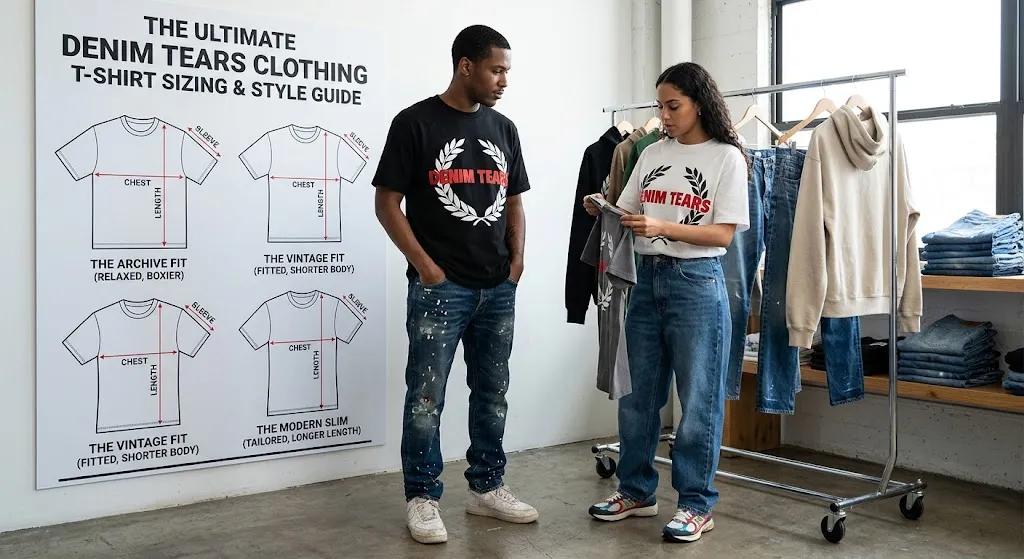
One practical issue that affects the value equation: Denim Tear sizing is notoriously inconsistent and runs small, particularly on denim. If you’re ordering online without trying pieces on, you run a real risk of ending up with something that doesn’t fit properly.
The brand’s denim is the biggest concern. The heavy fabric and minimal pre-shrinking mean that what feels snug in the store might become uncomfortably tight after a wash. The advice from people who’ve actually worn the pieces is consistent: size up, especially on denim. If you’re between sizes, go with the larger one.
For hoodies and tees, the fit is more forgiving, but the brand tends toward a boxy, relaxed silhouette that’s intentional. If you prefer a fitted look, you may need to size down.
So, Is It Worth It? A Practical Breakdown
The honest answer depends entirely on which product you’re considering.
Worth it: The in-house denim line. The 14 oz American-made denim, Japanese selvedge options, and sustainable production practices represent genuine value. You’re getting a well-constructed, durable garment with a meaningful design. At $300-$450, these compete favorably with premium denim brands like 3sixteen or Iron Heart, especially when you factor in the cultural narrative.
Worth it (conditionally): The Levi’s collaborations. The print quality and construction are excellent, and the resale value suggests the market agrees. But you’re paying a significant premium for the Levi’s name and the collaboration factor.
Harder to justify: Basic hoodies and tees at full retail. The $210 hoodie is a quality garment, but you’re paying a substantial premium for the graphic. If the cotton wreath design resonates with you personally, that premium may feel justified. If you’re looking for pure material value, there are better options at that price point.
Not worth it for most: The Swarovski cashmere pieces. At $2,800+ for a sweatsuit, you’ve left the realm of streetwear value entirely. These are luxury items for collectors or people with significant disposable income. The materials are genuinely premium, but the price-to-wear ratio is extreme.
Final Thoughts
Denim Tears occupies a unique position. It’s a brand where the cultural narrative genuinely matters, where the founder’s vision is consistent and uncompromising, and where the products are designed to be worn and used rather than preserved in plastic. That last point is worth emphasizing — Emory has said he believes fashion’s social power comes from its presence in daily life, not its elevation into collector contexts.
If you’re buying Denim Tears, buy it to wear. The denim will fade and crease in ways that make it more personal over time. The hoodies will soften with washing. The graphics will become part of your rotation.
Is it worth the money? For the denim, yes — especially the in-house line. For the hoodies and tees, it depends on how much the design and narrative mean to you. The quality is there, but you’re paying for more than just fabric.
And honestly, that’s true of every brand with a story worth telling.