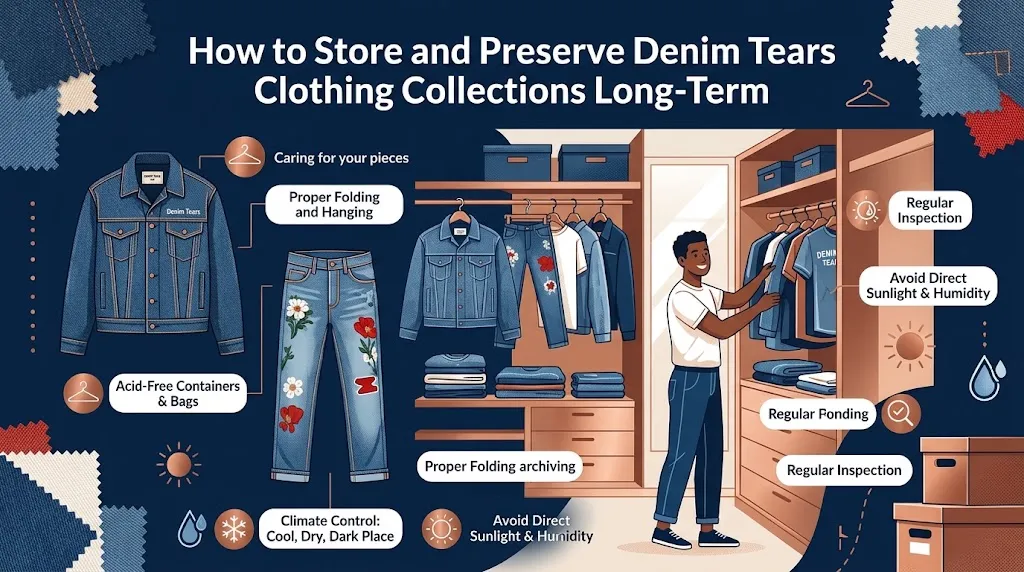
Denim Tear Clothing pieces are not just clothing. The cotton wreath motif, the heavyweight fleece, the carefully sourced denim—each element carries a story that Tremaine Emory built the brand to tell . Whether you own a single hoodie you wear weekly or a collection of pieces you rotate carefully, proper storage and preservation matter more than most people realize. A graphic tee crammed into a drawer or a hoodie hung by its shoulders for months will show damage long before the fabric itself wears out.
This guide walks you through the practical steps for keeping Denim Tears collections intact for years. No complicated equipment. No expensive products. Just consistent habits that protect the prints, the fabric, and the shape of each piece.
Understanding What You Are Preserving
Before talking about storage, it helps to know what actually breaks down on a Denim Tears garment.
Most Denim Tears hoodie and sweatshirts use heavyweight cotton fleece, often garment-dyed, with screen-printed or puff-printed graphics . The cotton wreath design sits on the surface of the fabric rather than soaking through it. That means heat and friction are the two forces that cause cracking, fading, and peeling over time . Garment-dyed fleece also tends to release dye more readily in the first few washes, which is worth knowing before you store a new piece next to something light-colored.
Denim Tears denim, particularly the Levi’s collaborations, carries printed or embroidered detailing on denim that has its own care requirements. Denim fibers are strong, but repeated exposure to heat and agitation weakens them and accelerates fading . The cotton wreath graphic on denim needs the same protection from friction and heat as the fleece pieces.
Understanding this basic material reality shapes every storage decision that follows.
The Golden Rule: Clean Before You Store
This is the step most people skip, and it is the one that causes the most long-term damage.
Body oils, sweat, and invisible residue attract pests and cause yellowing over time. If you are putting a piece away for the season or storing a grail you only wear occasionally, wash it first. But wash it correctly.
For hoodies and sweatshirts: turn the garment inside out, use cold water on a gentle cycle, and skip fabric softener entirely. Softener leaves a film that dulls print vibrancy over repeated washes . Air dry flat or hang away from direct sunlight.
For denim: wash inside out in cold water, and do it sparingly. Denim does not need washing after every wear—every five to eight wears is more appropriate for most pieces . Spot-clean small stains rather than washing the entire garment when possible .
For jackets: spot cleaning is almost always the better choice. A full wash should be a last resort, following the same cold, inside-out approach .
One critical point: never store a garment that is still damp. Even slight moisture trapped in a folded pile or a garment bag creates the conditions for mildew, which is nearly impossible to remove from cotton once it sets in.
Folding Versus Hanging: Getting It Right by Garment Type
The single biggest storage mistake people make with streetwear is hanging everything. Hangers are convenient, but they are not neutral. They exert stress on specific points of a garment, and over months or years, that stress becomes permanent distortion.
Hoodies and Heavyweight Fleece: Fold, Do Not Hang
Heavy fleece hoodies and sweatshirts should be folded for long-term storage . Hanging a heavyweight hoodie by its shoulders or hood stretches the shoulder seams and distorts the neckline over time. The weight of the fleece pulls downward constantly, and the hanger creates a pressure point at the shoulders that does not recover.
Fold hoodies neatly and stack them in a drawer or on a shelf. Avoid overstuffing—if the stack is so tight that you have to force the drawer closed, the pressure creates deep creases that can become permanent . A loose, breathable stack is better than a compressed one.
If you must hang a hoodie because of space constraints, use a wide, sturdy hanger and fold the garment over the bar rather than hanging it by the hood. Even then, treat it as a temporary solution, not a permanent storage method.
Denim and Jackets: Hanging Works, With Caveats
Denim jeans and trucker jackets can be hung, but the hanger matters . Thin wire hangers are out—they create creases and distort the shape of the waistband or shoulders. Use a sturdy, wide-shouldered hanger for jackets, and for jeans, either fold them over the bar of a hanger or use clip hangers on the inseam rather than the waistband .
Denim Tears denim with printed or embroidered detailing deserves special attention here. Hanging keeps the garment from developing fold creases across the graphic, which is a real risk if you fold a pair of jeans tightly and leave it for months. The print does not crack from folding alone, but repeated creasing in the same spot can weaken the ink over time.
T-Shirts and Lightweight Pieces: Fold Flat
Printed cotton tees should be folded flat and stored in a drawer or on a shelf. Hanging a tee stretches the neckline and shoulders, and the print does not benefit from being suspended vertically for long periods. Fold them neatly, stack them loosely, and keep the stack away from direct sunlight .
Protecting Prints from Light, Heat, and Friction
The cotton wreath graphic is the defining feature of most Denim Tears pieces. Protecting it during storage is not complicated, but it requires attention to three factors.
Light
UV rays fade fabric and printed graphics, and the damage is cumulative and irreversible . If your storage area receives direct sunlight—even for part of the day—move the collection. A closet with a door that stays closed is ideal. If you use open shelving, keep the pieces in breathable cotton garment bags or storage boxes that block light.
Do not use plastic bags or plastic bins for long-term storage . Plastic traps moisture and prevents air circulation, creating a microclimate where mildew thrives. Cotton garment bags or acid-free storage boxes are the safer choice.
Heat
Heat is the enemy of screen-printed graphics. Storing Denim Tears Clothing pieces in a hot attic, a garage that bakes in summer, or near a radiator or heating vent accelerates print degradation and can cause the ink to become brittle . A cool, stable interior closet is best. Basements can work if they are dry, but humidity is a concern—more on that below.
Friction
Friction during storage is less obvious than friction during washing, but it matters. Stacking a printed hoodie directly against a rough canvas jacket or a piece with metal hardware creates abrasion points. If you are stacking multiple pieces, place a layer of acid-free tissue paper between them, or at minimum, fold each piece so that the printed surface faces inward or is protected by a plain fabric surface .
For high-value or particularly fragile pieces, acid-free tissue paper inside the folds helps maintain shape and prevents creasing at sharp fold lines.
Managing Humidity and Pests
If you live in a humid climate, storage requires an extra layer of attention. Moisture is the root cause of mildew, and mildew on cotton is stubborn. Silica gel packets placed in drawers or storage boxes absorb excess moisture and are inexpensive insurance . Replace them every few months, especially during humid seasons.
For pest protection, cedar blocks or cedar-lined storage areas are a traditional and effective option. Avoid mothballs—the odor permeates fabric and is difficult to remove, and the chemicals are not ideal for long-term contact with clothing you intend to wear.
One practical habit: air out stored pieces occasionally. Every few months, take folded items out, give them a gentle shake, and let them breathe for a few hours before refolding. This prevents stale odors and allows you to check for any issues before they become serious.
Rotation and the Case Against “Storage Forever”
Some Denim Tear pieces are collectors’ items, and it is tempting to seal them away indefinitely. But clothing stored untouched for years can develop issues that regular inspection would catch early—a small pest problem, a bit of moisture, a crease that sets into the fabric.
Rotate your collection. Wear the pieces you own, at least occasionally. A hoodie that gets worn and washed properly every few months is actually healthier than one that sits folded in the same position for three years. The fibers relax, the folds shift, and you notice any damage while it is still minor .
For genuinely archival pieces—something you are holding for resale or as a collection piece—inspect them every season. Unfold, check for any discoloration or pest activity, refold along slightly different lines to prevent permanent creases, and return to storage.
Repair Early, Not Later
Small issues become large ones if ignored. A loose seam on a hoodie pocket, a tiny pull in the cotton wreath embroidery, a fraying hem on a pair of jeans—these are five-minute fixes if you address them when you notice them . Left alone, they become tears, and tears become replacements.
Learn a basic whip stitch or running stitch. Keep a needle and thread that matches the garment color. For Denim Tears pieces with embroidery or appliqué, check the threads periodically and secure any loose ends before they snag and pull.
A Final Word on Wear
Preservation is not about keeping a garment frozen in time. Denim Tears pieces are designed to be worn, and the cotton wreath carries meaning that is meant to be seen . The goal of proper storage is to slow the wear that comes from neglect—the cracked print from a hot dryer, the stretched shoulders from a wire hanger, the mildew from damp storage—so that the wear a piece does accumulate comes from actual use, not from carelessness.
A well-preserved Denim Tears collection is one that can still be worn years from now. That is the point.