Fashion collaborations are everywhere these days. Most of them feel transactional—a logo swap, a temporary hype cycle, and then silence. But the Denim Tears x Dior project, officially titled Dior Tears, was different. It carried weight. It had a narrative. And it proved that streetwear could walk into the highest halls of luxury without losing its soul.
If you have been curious about what this collaboration actually represented beyond the product shots and price tags, this breakdown covers the story, the design language, and why it still matters in the conversation between luxury and streetwear.
The Brains Behind the Collision
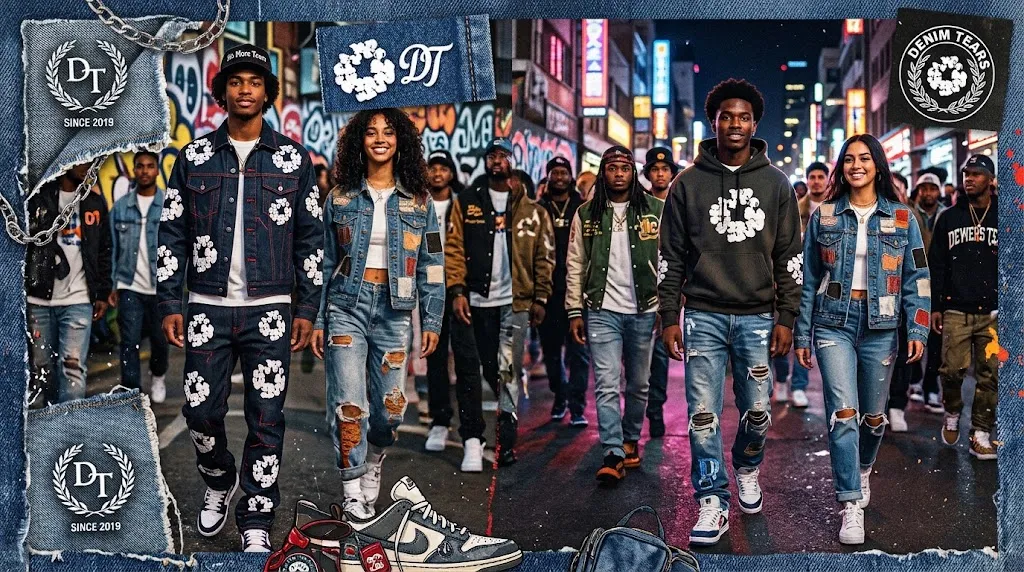
To understand Dior Tears, you first need to understand Tremaine Emory. He founded Denim Tears in 2019, naming it after the cotton that built slavery and the pain endured by Black Americans who harvested it . Emory is not a conventional designer chasing trends. He is a storyteller who uses clothing as a Trojan horse for history, memory, and cultural critique .
Before Dior came calling, Emory had already built a reputation as a cultural catalyst. He co-founded No Vacancy Inn, worked with Virgil Abloh, and briefly served as creative director at Supreme . His brand Denim Tears became known for the cotton wreath motif—a symbol loaded with historical meaning—and for collaborations with Levi’s, Stüssy, and Our Legacy .
On the other side stood Kim Jones, Dior Men’s artistic director, a designer famous for merging luxury tailoring with streetwear sensibilities. Jones had previously brought artists like KAWS and Daniel Arsham into the Dior universe. Bringing Emory in as a guest designer for a full capsule was a statement: Dior was not just borrowing streetwear aesthetics; it was inviting a specific voice with a specific message .
The Story That Drove the Collection
The Dior Tears collection was not inspired by random mood boards. It was built around a very specific historical moment: the mid-20th century when Black American writers, musicians, and artists fled the segregated United States and found a degree of acceptance in European cities, particularly Paris .
Emory put it plainly in his statements for the collection. He wanted to share “that beautiful moment in time where Black writers and musicians and artists were coming from America, running from America, and finding some level of acceptance in certain European cities and being able to have their art respected and who they are respected” .
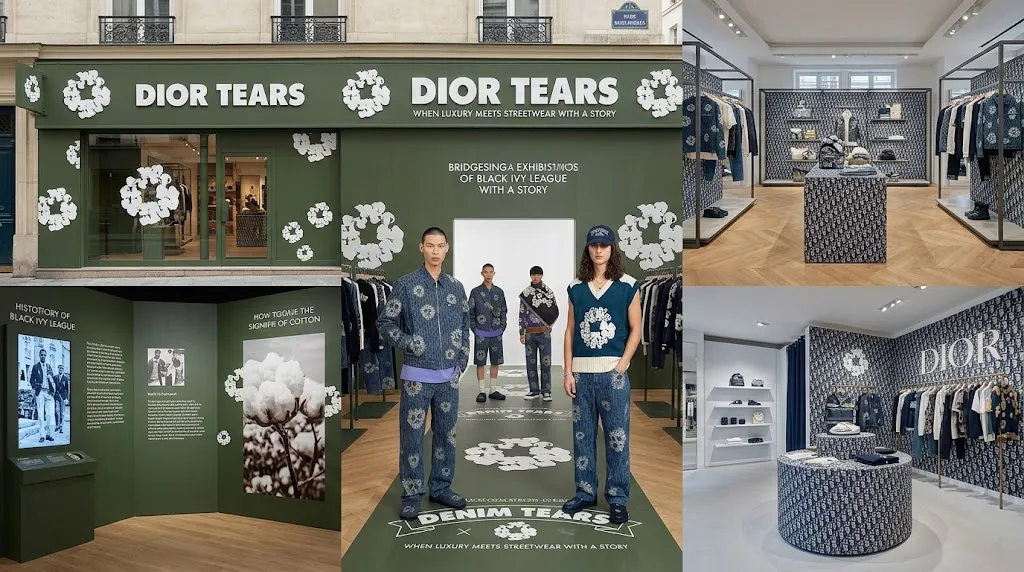
Figures like James Baldwin and Miles Davis became the emotional anchors of the collection. Baldwin found refuge in Paris; Davis toured Europe and found audiences that treated jazz with seriousness rather than novelty. The clothing reflected this cross-Atlantic dialogue—American denim and workwear shapes meeting French couture techniques, 1950s silhouettes, and the polished ease of the Black Ivy League aesthetic .
That is the part most collaborations skip. Dior Tears had a thesis.
Design Language: Denim, Jacquard, and Jazz Age Elegance
Denim as the Foundation
Denim was the obvious starting point, given Emory’s brand identity. But this was not raw, distressed streetwear denim. Dior Tears treated denim with a couture sensibility. The collection featured special jacquards, 1950s cuts, and a fusion of American homespun textile traditions with French high craft .
The result was denim that felt tailored rather than casual—pieces that could sit alongside Dior’s mainline tailoring without looking out of place. That balance was intentional. Kim Jones has always been skilled at making luxury feel wearable, and Emory’s historical references kept the denim from feeling like a gimmick.
The Ivy League and Jazz Musician Influence
Beyond denim, the collection leaned heavily into the wardrobe of mid-century Black intellectuals and musicians. You saw wool varsity jackets with crystallized Dior Tears logos, sweater vests with collegiate lettering, and plaid shirts and chino pants that nodded to the Black Ivy style of the 1950s and 60s .
The standout accessory was the trumpet bag—a cognac leather piece shaped with a musical reference that tied directly back to the jazz narrative . There were also crochet bucket hats and chunky Dior logo rings with malachite-effect resin, small details that added texture without overwhelming the story .
One particularly clever design move was the remixing of Dior’s Oblique print with Denim Tears’ cotton peace sign motif. It was a literal merging of two visual languages: the French luxury monogram and the American historical symbol .
The Presentation: Cairo and the Egyptian Museum
The collection was unveiled at the Grand Egyptian Museum in Cairo, a setting that might seem unexpected for a Parisian maison until you consider the narrative. The presentation featured tableaux vivants—living pictures—with models arranged among antiquities. Music was directed by artist and composer cktrl, blending jazz and contemporary sounds .
The location choice echoed the collection’s theme of cultural exchange across geographies: New York to Paris, via New Orleans, to Cairo . It was a visual reminder that the story of the African diaspora is not confined to one city or one continent.
What the Collaboration Meant for Both Sides
For Dior
Dior gained something that luxury houses often struggle to manufacture: authentic cultural credibility. Luxury brands have spent the past decade trying to appeal to younger, streetwear-influenced consumers. Many of those efforts feel forced—a hoodie here, a sneaker there, a rapper in the front row. Dior Tears felt different because Emory was given space to bring his actual creative vision, not just his logo .
Kim Jones has been running this play for years. His tenure at Dior Men has been defined by collaborations that feel like conversations rather than transactions. With Emory, the conversation was about race, exile, art, and belonging. That is not typical luxury marketing copy. And that is precisely why it worked.
For Denim Tears
The Dior collaboration elevated Denim Tears from a respected independent label to a name that could sit alongside the biggest luxury houses in the world. Emory’s brand was already generating significant revenue and had a devoted following, but Dior gave it a different kind of visibility .
More importantly, the collaboration did not dilute what Denim Tears Clothing stands for. The historical narrative, the cotton wreath symbolism, the focus on Black American experience—all of that remained intact. Emory did not sand down his message to fit into Dior’s aesthetic. He brought Dior into his world as much as Dior brought him into theirs.
The Reality of Buying It
The Dior Tears capsule released in July 2023 through Dior’s website and a series of global pop-up stores . The price range was predictably luxury: roughly $300 to $8,100 depending on the piece . Sneakers like the B27 Low carried a retail price around $1,300 .
For most people, Dior Tears was not an accessible purchase. That is worth acknowledging honestly. The collaboration was never meant to be democratic. It was a statement piece for a luxury clientele and a cultural moment for everyone else. The resale market reflected the demand, with certain pieces commanding premiums well above retail.
If you are looking for a piece today, you are likely browsing resale platforms, vintage luxury specialists, or archival fashion sellers. The original pop-ups are long gone.
Why Dior Tears Still Matters
Fashion moves fast. A collaboration that dominated conversations in 2023 can feel forgotten by the next season. But Dior Tears deserves a place in the broader story of how luxury and streetwear learned to coexist.
It proved that storytelling can be a luxury product. It showed that a streetwear founder could step into a heritage maison without abandoning his values. And it demonstrated that the most interesting collaborations are not the ones with the loudest logos, but the ones with something actual to say.
Tremaine Emory has since continued to build Denim Tear as a platform for Black cultural history, with museum exhibitions and permanent collections at institutions like the Metropolitan Museum of Art’s Costume Institute . The Dior chapter was not a detour from that mission. It was an amplification of it.
For anyone interested in the intersection of fashion, history, and cultural exchange, Dior Tears is worth studying. Not just for the varsity jackets or the trumpet bag, but for what it represented: two worlds meeting, and neither one backing down from what it believed in.